

Updates
home / News
Bagged vs Bulk Cement in Uganda: Which Is Better for Large Construction Projects?
As construction projects become larger, contractors increasingly need to consider not only the type of cement they purchase but also how the cement is delivered and handled.
For smaller construction sites, bagged cement may be practical. For high-volume projects, however, bulk cement can offer logistical advantages when the project has the right storage and handling infrastructure.
What Is Bagged Cement?
Bagged cement is supplied in individual bags and is commonly used across residential, commercial and smaller construction projects.
Its advantages include:
Easy handling
Flexible purchasing
Simple distribution
Suitable for sites without bulk storage
Convenient for smaller quantities
Bagged cement is particularly practical when daily consumption is relatively modest.
What Is Bulk Cement?
Bulk cement is transported in larger quantities, typically using specialised bulk cement vehicles, and discharged into suitable storage silos at the project location.
It is more commonly associated with high-volume construction and industrial applications.
When Does Bulk Cement Make Sense?
Bulk cement can become attractive when a project has consistently high cement consumption.
Examples may include:
Large commercial developments
Infrastructure projects
Ready-mix concrete operations
Precast production
Large housing developments
Industrial construction
Major civil works
The project must, however, have appropriate receiving and storage infrastructure.
Potential Advantages of Bulk Cement
1. Reduced Bag Handling
Because cement does not need to be manually handled bag by bag, bulk systems can reduce labour associated with unloading and internal movement.
2. Faster Material Transfer
Where suitable equipment is available, cement can be transferred directly into storage silos.
3. Better High-Volume Logistics
Large projects consuming significant quantities can coordinate deliveries based on silo capacity and production schedules.
4. Reduced Packaging Handling
Bulk supply removes the need to manage large volumes of empty cement bags.
When Are Bags More Practical?
Bagged cement remains highly practical where:
The project has no silo.
Consumption is relatively low.
The site is small.
Different cement quantities are required at different locations.
Manual handling is already incorporated into the construction process.
Therefore, bulk cement should not automatically be considered superior. The appropriate delivery method depends on the project.
The Importance of Delivery Planning
Large-volume cement procurement requires coordination between the supplier and the construction team.
The project should consider:
Silo capacity
Delivery frequency
Truck access
Daily consumption
Storage safety
Offloading arrangements
Construction programme
Poor planning can create delays even when the cement itself is available.
Yaobai Cement Supply for Commercial Projects
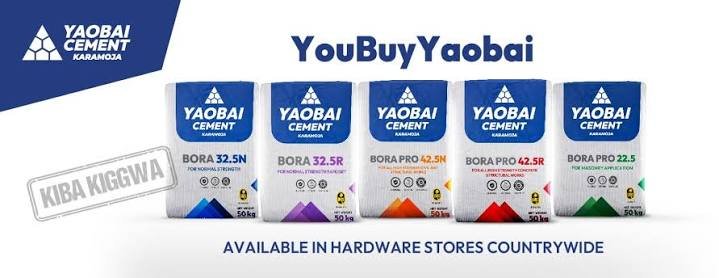
Mega Pak Uganda Limited works with contractors, developers and commercial buyers requiring Yaobai Cement supply in Uganda.
Customers undertaking high-volume construction can discuss whether bagged or bulk supply is more appropriate based on their project requirements.
A Practical Procurement Formula
Before choosing the delivery format, consider:
Monthly consumption + storage capacity + delivery frequency + handling system + project location.
This provides a more useful basis for decision-making than simply comparing the price of a bag against the price per tonne.
Conclusion
Bagged and bulk cement each have their place in Uganda’s construction industry.
For smaller and flexible requirements, bagged cement can be highly practical. For consistently high-volume operations with suitable infrastructure, bulk cement can provide logistical advantages.
Mega Pak Uganda Limited can assist commercial construction customers in planning Yaobai Cement supply according to their project requirements.